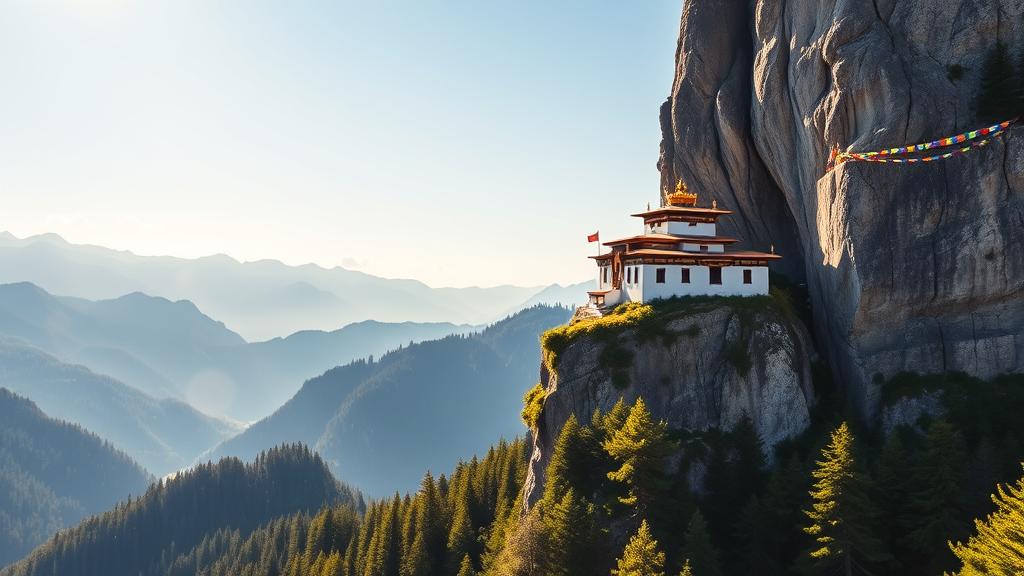
Bhutan
ভুটান
Important Notice
This content is AI-generated and under editorial review. Visa rules can change at any time. Always verify the latest requirements with the relevant embassy or immigration authority before making travel decisions.
6 months
passport validity required
Dzongkha
official language
English spoken
BTN
currency
About
ECONOMIC CONTEXT:
Bhutan has a GDP per capita of approximately **$3,600** (2024) — comparable to Bangladesh's level. The population is approximately **780,000**. The Bhutanese Ngultrum (BTN) is pegged to the Indian Rupee at 1:1.
Bhutan's economy is dominated by hydropower (electricity exports to India account for a significant share of government revenue), agriculture, forestry, and a carefully controlled tourism sector. The Sustainable Development Fee (SDF) of USD 100/day applies to most tourists, reflecting Bhutan's "high-value, low-impact" tourism philosophy.
FOREIGN WORKER MANAGEMENT:
Bhutan's FWMS was tightened in 2024-2025. Foreign worker permits are issued only where locals cannot fill positions. Work permits are available in two types: short-term (project-based, primarily construction) and long-term (specialised skills). The system is quota-controlled by sector.
Indian nationals are the dominant foreign workforce in Bhutan due to the open-border arrangement between India and Bhutan. Bangladesh has no such arrangement.
DIPLOMATIC PRESENCE:
Bangladesh does NOT have an embassy or diplomatic mission in Bhutan. The nearest Bangladesh mission is the **Bangladesh High Commission in New Delhi** (~600 km from Thimphu by road via the Jaigaon-Phuntsholing land border crossing and Indian territory). Consular coverage for Bhutan is handled from New Delhi.
Bhutan is not rated in the US TIP Report (very small country with minimal trafficking assessment coverage).
The Active Jobs section above shows the current live count for Bhutan.
Entry & Visa Requirements
- Visa-Free
- Bangladeshi nationals can enter Bhutan visa-free as SAARC nationals. However, entry requires a Route Permit issued by the Department of Immigration. Entry is through the Phuntsholing land border (from India) or Paro International Airport.
The visa-free arrangement is for tourism and short visits. Work requires a separate permit through the FWMS system, which is quota-controlled and employer-sponsored.
Bhutan's Sustainable Development Fee (SDF) of USD 100/day applies to most international tourists (SAARC nationals including Bangladeshis are exempt from the SDF but still require a Route Permit). - No return ticket required
- No proof of funds required
Work Permit Pathway
Two permit types exist: short-term (project-based, primarily construction) and long-term (specialised skills). Both require employer sponsorship and FWMS approval.
Indian nationals dominate the foreign workforce due to the India-Bhutan open border arrangement. No such arrangement exists between Bangladesh and Bhutan.
There is no bilateral labour agreement between Bangladesh and Bhutan. No recruitment pathway exists. No BMET-registered agencies recruit for Bhutan.
BMET clearance is not applicable — there is no formal labour corridor to Bhutan.
Overstay Penalties & Consequences
Detection with a cancelled or expired immigration permit incurs a fine of Nu. 25,800 (approximately USD 310), calculated using a 120-day wage rate formula. This applies whether the overstay is discovered through inspection or at the point of departure. The fine must be paid before any resolution of immigration status.
Deportation is immediate upon detection. The overstayer is removed from the nearest point of exit. Deportation records affect future entry applications — while a formal ban period is not published, practical experience shows that deported individuals face severe difficulty obtaining any future Bhutanese visa or work permit.
Bhutan conducts active inspections at construction sites, commercial areas, residential zones, and official premises to detect illegal immigrants, unauthorized workers, and overstayers. This is not theoretical — the Department of Immigration regularly conducts field inspections, particularly in areas with high foreign worker concentrations such as hydropower project sites and Thimphu construction zones.
For work permit holders, the permit must be renewed BEFORE expiry. Working with an expired permit is treated as unauthorized employment, which carries the same penalties as overstay plus additional consequences for the employer. Employers who allow unauthorized foreign workers face fines and potential revocation of their foreign worker quota.
The practical implication for Bangladeshi workers: do not overstay or work without valid documentation. Unlike some countries where enforcement is lax, Bhutan actively monitors its small foreign worker population. The Department of Immigration maintains a digital register through BLMIS, and compliance is tracked systematically.
Job Market
Bhutan is NOT a labour destination for Bangladeshi nationals. Bhutan's economy is small (~780,000 population) and its FWMS strictly controls foreign worker permits. The dominant foreign workforce is Indian (due to the India-Bhutan open border).
Bhutan's economy centres on hydropower, agriculture, forestry, and controlled tourism. No recruitment infrastructure exists between Bangladesh and Bhutan.
Salary & Payments
Since Bhutan is not a labour destination for Bangladeshi nationals, salary ranges are not applicable. Bhutan's minimum wage for the private sector is Nu 450/day (~USD 5.30).
Where to Apply
Last updated: 2026-06-15
Housing & Living
Thimphu cost estimates (per Numbeo 2026): Average monthly cost for a single person including rent is approximately USD 1,033, or USD 753 excluding rent. A couple spends approximately USD 1,571 including rent. These figures represent Thimphu city living — rural areas and construction project sites are significantly cheaper.
Housing: A one-bedroom apartment in Thimphu city center costs Nu. 8,000-15,000/month (USD 96-180). Outside the center, Nu. 5,000-10,000/month. Shared accommodation among workers is common and brings costs down to Nu. 3,000-5,000/month per person. On hydropower and construction sites, employers typically provide basic dormitory-style housing at no cost to workers. However, documented conditions are basic — an LSE South Asia Centre study described typical worker housing as uninsulated wooden cabins with wooden platforms serving as beds, without proper windows. Workers should set realistic expectations about accommodation quality on remote project sites.
Food: Bhutan's food prices are approximately 69% cheaper than the US (per Numbeo). Rice costs approximately Nu. 59/kg, onions Nu. 60/kg, bread Nu. 71/half kg. A basic meal in a local restaurant costs Nu. 150-300 (USD 1.80-3.60). Bhutanese cuisine is centered on rice, chillies, and cheese (ema datshi is the national dish). Meat — primarily pork and beef — is available but many Bhutanese are Buddhist vegetarians.
For Bangladeshi Muslim workers, food presents a specific challenge: there are no halal-certified restaurants in Bhutan. Le Meridien hotels in Thimphu and Paro can arrange halal meat on advance request, but this is a tourist-oriented service, not an everyday food solution. Workers will need to rely on vegetarian options (widely available given Buddhist dietary culture) or arrange their own halal food supply. Fresh vegetables, rice, and lentils are affordable and accessible.
Transport: Bhutan has limited public transport. Taxis in Thimphu cost Nu. 100-300 for city trips. No domestic rail exists. Most construction sites provide worker transport to and from project locations.
Currency convenience: The BTN-INR 1:1 peg means prices in Bhutan are directly comparable to Indian prices. A Bangladeshi worker familiar with Indian pricing will find Bhutan predictable (approximately 1.4 BDT per 1 BTN).
Overall assessment: With employer-provided housing on construction projects, a worker's actual monthly expenses can be kept to Nu. 5,000-8,000 (USD 60-96, BDT 7,000-11,200) for food, personal items, and occasional transport. This makes the effective savings rate on a hydropower salary of Nu. 15,000-25,000 reasonably attractive — potentially saving Nu. 10,000-17,000/month (BDT 14,000-23,800) if housing is provided.
Social & Culture
Bangladesh and Bhutan are both SAARC member states and maintain cordial bilateral relations, but the relationship lacks the depth of Bangladesh-India or Bangladesh-Nepal ties.
Business Opportunities
Key FDI provisions (per Invest Bhutan at investbhutan.gov.bt):
100% foreign ownership is permitted in: education, health, hotels and resorts, and infrastructure facilities. These represent the most open sectors for Bangladeshi entrepreneurs.
For other sectors, a minimum 20% foreign equity stake is required (10% minimum for foreign institutional investors). This means a Bangladeshi investor must hold at least 20% of the company — full ownership is not available in restricted sectors.
Investor cards are available for investments above Nu. 20 million (approximately USD 240,000): these grant a 1-year stay with annual extensions, providing residency-like status for significant investors.
Major changes from previous rules: The mandatory 3-year lock-in period (which previously required 100% equity retention for 3 years) has been removed. Full dividend repatriation rights are now guaranteed in the currency of investment. Companies must incorporate under the Companies Act of Bhutan 2016.
Registration process: Foreign investors register through Invest Bhutan (investbhutan.gov.bt). The process requires: business plan, proof of funds, incorporation documents, environmental impact assessment (where applicable), and GNH screening compliance.
Gelephu Mindfulness City — the headline investment opportunity:
The GMC is a planned 2,500 sq km special economic zone in southern Bhutan, announced by King Jigme in December 2023. It targets fintech, wellness tourism, green technology, and blockchain initiatives (including a gold-backed TER token on the Solana blockchain). The project envisions 100,000 jobs by 2030 with an international airport under construction. For investors, the GMC represents a greenfield opportunity in a purpose-built economic zone with dedicated governance.
However, the GMC is in very early stages — construction has begun on the airport and basic infrastructure, but the regulatory framework, tax incentives, and specific investment terms are still being finalized. Treat it as a medium-term opportunity, not an immediate one.
GNH impact on business: All policies in Bhutan are screened for GNH alignment. This is not decorative — it affects regulatory approvals, operating conditions, and the types of businesses that are permitted. "Mindful capitalism" means businesses are expected to balance profit with ecological harmony and social well-being. Industries that conflict with GNH principles (heavy pollution, exploitative labor practices, environmentally destructive activities) face higher regulatory scrutiny regardless of economic potential.
Practical challenges for Bangladeshi entrepreneurs:
Bhutan's domestic market is tiny (~780,000 people). Most successful foreign businesses either export (hydropower, premium agriculture) or serve the tourism market. A business targeting only domestic consumers has limited scale potential.
The business environment is improving but still relatively bureaucratic. Bhutan ranked 89th in the World Bank's last Doing Business report (2020). The 2024 FDI reforms aim to improve this, but implementation is still maturing.
Banking and financial infrastructure is limited. The Bank of Bhutan and Bhutan National Bank are the primary institutions. International banking services are nascent. No direct Bangladesh-Bhutan financial corridor exists.
For Bangladeshi investors with capital and patience, the most realistic opportunities are: (1) hospitality/tourism ventures (100% ownership permitted), (2) education services (100% ownership), (3) subcontracting to hydropower projects, and (4) early-stage positioning in the Gelephu Mindfulness City ecosystem.
Content Quality
AI Generated — Under ReviewVerify with Embassy
Visa rules change frequently. Always verify the latest entry requirements with the embassy or consulate of your destination country before making travel plans.
View Embassy DirectoryCost of Living
Bhutan's cost of living is moderate by South Asian standards, with Thimphu (the capital) being the most expensive city. Construction workers on hydropower projects typically receive employer-provided housing, which fundamentally changes the cost equation — workers with provided accommodation have minimal living expenses. Thimphu cost estimates (per Numbeo 2026): Average monthly cost for a single person including rent is approximately USD 1,033, or USD 753 excluding rent. A couple spends approximately USD 1,571 including rent. These figures represent Thimphu city living — rural areas and construction project sites are significantly cheaper. Housing: A one-bedroom apartment in Thimphu city center costs Nu. 8,000-15,000/month (USD 96-180). Outside the center, Nu. 5,000-10,000/month. Shared accommodation among workers is common and brings costs down to Nu. 3,000-5,000/month per person. On hydropower and construction sites, employers typically provide basic dormitory-style housing at no cost to workers. However, documented conditions are basic — an LSE South Asia Centre study described typical worker housing as uninsulated wooden cabins with wooden platforms serving as beds, without proper windows. Workers should set realistic expectations about accommodation quality on remote project sites. Food: Bhutan's food prices are approximately 69% cheaper than the US (per Numbeo). Rice costs approximately Nu. 59/kg, onions Nu. 60/kg, bread Nu. 71/half kg. A basic meal in a local restaurant costs Nu. 150-300 (USD 1.80-3.60). Bhutanese cuisine is centered on rice, chillies, and cheese (ema datshi is the national dish). Meat — primarily pork and beef — is available but many Bhutanese are Buddhist vegetarians. For Bangladeshi Muslim workers, food presents a specific challenge: there are no halal-certified restaurants in Bhutan. Le Meridien hotels in Thimphu and Paro can arrange halal meat on advance request, but this is a tourist-oriented service, not an everyday food solution. Workers will need to rely on vegetarian options (widely available given Buddhist dietary culture) or arrange their own halal food supply. Fresh vegetables, rice, and lentils are affordable and accessible. Transport: Bhutan has limited public transport. Taxis in Thimphu cost Nu. 100-300 for city trips. No domestic rail exists. Most construction sites provide worker transport to and from project locations. Currency convenience: The BTN-INR 1:1 peg means prices in Bhutan are directly comparable to Indian prices. A Bangladeshi worker familiar with Indian pricing will find Bhutan predictable (approximately 1.4 BDT per 1 BTN). Overall assessment: With employer-provided housing on construction projects, a worker's actual monthly expenses can be kept to Nu. 5,000-8,000 (USD 60-96, BDT 7,000-11,200) for food, personal items, and occasional transport. This makes the effective savings rate on a hydropower salary of Nu. 15,000-25,000 reasonably attractive — potentially saving Nu. 10,000-17,000/month (BDT 14,000-23,800) if housing is provided.
Free Tools to Help You Apply
Apply directly to overseas employers.
All tools are free. Cover letter and contract checker require a free account.
Before You Travel
Visa-free entry is just the first step. Real preparation matters.
- • Passport validity (6+ months beyond travel date)
- • Return/onward ticket booking
- • Proof of funds documentation
- • Currency exchange arrangement
- • Vaccinations (per destination requirements)
- • Emergency contacts (embassy, family)
Sponsored Agencies
Italia Manpower
Your bridge to Italian employment
View profile →BritishWork BD
UK and Ireland recruitment specialists
View profile →Iberia Talent Bridge
IT and hospitality bridge to Iberia
View profile →NEW STAR RECRUITING AGENCY
Mk Nasir uddin
View profile →Sponsored content. Verify agencies with BMET before any payment.
Last verified
15 Jun 2026
Visa rules may change — always verify before travel.


