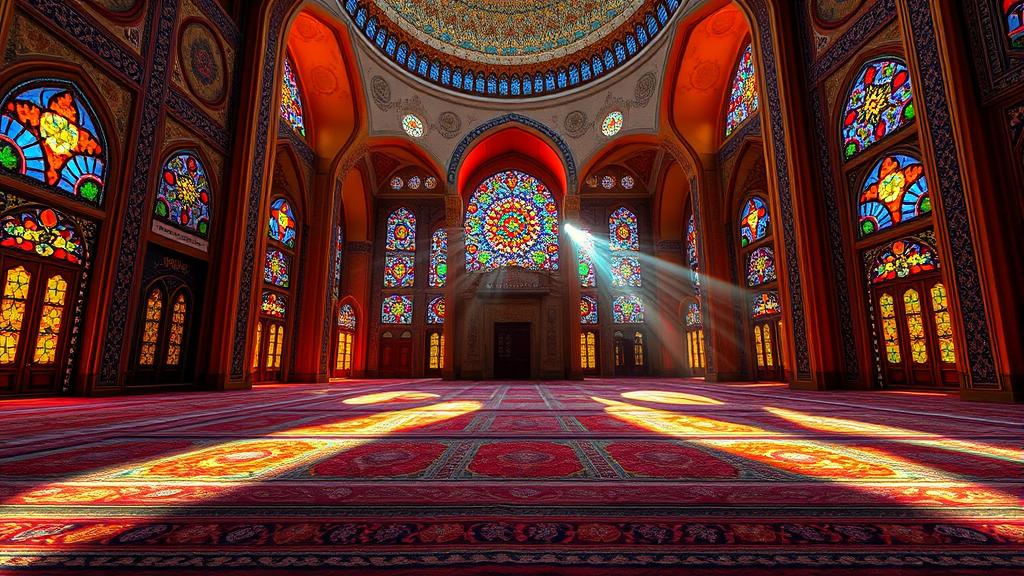
Iran
ইরান
Important Notice
This content is AI-generated and under editorial review. Visa rules can change at any time. Always verify the latest requirements with the relevant embassy or immigration authority before making travel decisions.
6 months
passport validity required
Farsi (Persian)
official language
IRR
currency
About
Approximately 2,000 Bangladeshi nationals reside in Iran, primarily in professional roles such as medical doctors — a negligible presence compared to 90,000 in Jordan, 200,000-250,000 in Iraq, or 3.5 million in Saudi Arabia. There is no BMET-tracked labour flow to Iran, no bilateral labour MOU between Bangladesh and Iran, and no recruitment pipeline or agency infrastructure handling Iranian placements.
The fundamental barrier is that Iran's foreign labour market is dominated by Afghan workers. Iran hosts approximately 433,000 registered Afghan workers who constitute roughly 75% of the 1.5 million construction-sector workforce. This Afghan labour monopoly means there is no demand for Bangladeshi workers — the market is saturated with a linguistically closer, geographically adjacent, and already-established workforce.
Iran's economy is under severe international sanctions that make remittances — the primary reason Bangladeshi workers migrate — effectively impossible through formal banking channels. The Iranian Rial has collapsed to approximately 1,450,000 per USD, with inflation averaging 40% and projected to reach 55% in 2026. GDP contracted by 2.7% in 2025. The minimum wage in Iran is approximately USD 75-110 per month — which is LOWER than what Bangladeshi garment workers earn at home (~USD 113/month at the current RMG minimum). This eliminates the income multiplier that drives labour migration.
There is no eVisa for Iran. This was confirmed during the Henley correction review (D25). Bangladeshi nationals must apply for a visa in person at the Iran Embassy in Dhaka. No labour-specific visa categories are actively processed for Bangladeshi workers.
Iran is classified as US TIP Tier 3 (2025) — the worst possible rating. The US State Department documents state-sponsored trafficking: the IRGC (Islamic Revolutionary Guard Corps) recruits child soldiers, and Afghan Special Forces veterans have been coerced to fight for Houthi forces in Yemen. Iranian law does not criminalize all forms of trafficking. There is no national anti-trafficking strategy. While no Bangladeshi-specific trafficking to Iran is documented, the Tier 3 status reflects a government that is itself a perpetrator, not a protector.
The US travel advisory for Iran is Level 4 — Do Not Travel, citing wrongful detention of foreign nationals, civil unrest (December 2025 protests), and military escalation (June 2025). Farsi is the sole working language with no South Asian community providing a linguistic bridge — workers without Farsi proficiency would be completely isolated. The Rial at approximately 1,450,000 per USD is one of the weakest currencies in the world; wages lose value rapidly under 40-55% inflation.
If you travel to Iran on a work-permit visa, you must obtain BMET clearance (smart card) from Bangladesh before departure — this applies to all work-visa departures regardless of destination. However, there is no established labour migration corridor to Iran — no BOESL processing, no agency infrastructure, and no BMET-tracked flow. If an agent offers you a work placement in Iran, verify the offer independently through the Bangladesh Embassy in Tehran before committing any money. Any construction, factory, or domestic work placement offer for Iran is almost certainly fraudulent.
The Active Jobs section above shows the current live count for Iran.
Entry & Visa Requirements
- Work Visa Required
- Iran requires a work visa obtained from the Iran Embassy in Dhaka — there is no eVisa (confirmed Henley correction D25). The Ministry of Cooperatives, Labour, and Social Welfare administers work permits. Employers must demonstrate no qualified Iranian citizen is available. Work permits are employer-sponsored and annually renewable. In practice, no Bangladeshi labour migration to Iran exists: no MOU, no BOESL processing, no recruitment agencies handle Iranian placements. The approximately 2,000 Bangladeshi nationals in Iran arrived through individual professional channels (primarily medical doctors), not through the BMET/BOESL pipeline.
- No return ticket required
- No proof of funds required
Work Permit Pathway
The Afghan labour monopoly is structural: approximately 433,000 registered Afghan workers (and an estimated 2-3 million undocumented) fill virtually all foreign-worker demand in construction, agriculture, and services. Afghan workers share linguistic proximity (Dari is mutually intelligible with Farsi), geographic adjacency, and multigenerational settlement patterns. There is no labour-market gap for Bangladeshi workers to fill.
If you have a genuine professional opportunity in Iran:
1. Verify the offer independently through the Bangladesh Embassy in Tehran (tehran.mofa.gov.bd, +98 21 2205 8825).
2. Obtain a work visa from the Embassy of Iran in Dhaka — there is no eVisa.
3. If travelling on a work-permit visa, obtain BMET clearance (smart card) before departure. The smart card fee was abolished in December 2025.
4. Be aware that international sanctions severely restrict banking and remittance channels. You may not be able to send money home through formal systems.
5. Iran's TIP Tier 3 status means the government itself is documented as a trafficking perpetrator. Exercise extreme caution.
WARNING: If an agent or dalal offers you a construction, factory, or domestic work placement in Iran, this is almost certainly fraudulent. Do not pay recruitment fees for Iranian placements. Report suspicious offers to the Bangladesh Embassy in Tehran or your local BMET office.
Overstay Penalties & Consequences
The real risks for any Bangladeshi who does enter Iran on a work visa: wrongful detention of foreign nationals (documented by US State Department), inability to remit earnings due to sanctions, currency collapse eroding wages, and complete linguistic isolation with no community support. Iran's TIP Tier 3 status means the government is a trafficking perpetrator, not a protector of foreign workers.
Job Market
Key sectors include oil and gas (world's second-largest natural gas reserves, fourth-largest oil reserves), petrochemicals, automotive manufacturing, and agriculture. The economy is heavily state-controlled with significant IRGC involvement in commercial enterprises.
For Bangladeshi workers, the job market is completely closed:
- The Afghan labour monopoly fills all foreign-worker demand — approximately 433,000 registered workers plus an estimated 2-3 million undocumented
- Afghan workers have linguistic proximity (Dari is mutually intelligible with Farsi), geographic adjacency, and multigenerational settlement
- No sector has unmet demand that Bangladeshi workers could fill
- Sanctions prevent normal business operations, international banking, and remittance transfers
- The currency collapse (Rial at ~1,450,000/USD) and inflation (40%+, projected 55% in 2026) make wages economically unviable even if employment were available
- Iran's minimum wage of approximately USD 75-110/month is LOWER than Bangladesh's RMG minimum (~USD 113/month)
Iran's population of 92.4 million includes substantial domestic unemployment. The government has actively prioritised Iranian and Afghan workers, with no outreach to South Asian labour sources.
Salary & Payments
| Sector | Min | Max | Currency |
|---|---|---|---|
| 0 | 0 | IRR/mo |
Where to Apply
Last updated: 2026-06-13
Housing & Living
Social & Culture
Content Quality
AI Generated — Under ReviewVerify with Embassy
Visa rules change frequently. Always verify the latest entry requirements with the embassy or consulate of your destination country before making travel plans.
View Embassy DirectoryCost of Living
Iran's cost of living is distorted by sanctions, currency collapse, and inflation. While nominally cheaper than Gulf states, the Rial's collapse to ~1,450,000/USD means local prices fluctuate dramatically. Inflation averaged 40% in 2025 and is projected at 55% in 2026. Basic goods prices are unstable. International banking restrictions mean foreign workers cannot easily access their own funds or receive transfers. This is not a functioning economic environment for labour migration.
Free Tools to Help You Apply
Apply directly to overseas employers.
All tools are free. Cover letter and contract checker require a free account.
Before You Travel
Visa-free entry is just the first step. Real preparation matters.
- • Passport validity (6+ months beyond travel date)
- • Return/onward ticket booking
- • Proof of funds documentation
- • Currency exchange arrangement
- • Vaccinations (per destination requirements)
- • Emergency contacts (embassy, family)
Sponsored Agencies
NEW STAR RECRUITING AGENCY
Mk Nasir uddin
View profile →EuroStaff Solutions
Licensed EU recruiter since 2015
View profile →SwissAlps Talent
Switzerland and Austria — premium opportunities
View profile →France Recruit Pro
Direct French site contracts
View profile →Sponsored content. Verify agencies with BMET before any payment.
Last verified
13 Jun 2026
Visa rules may change — always verify before travel.


