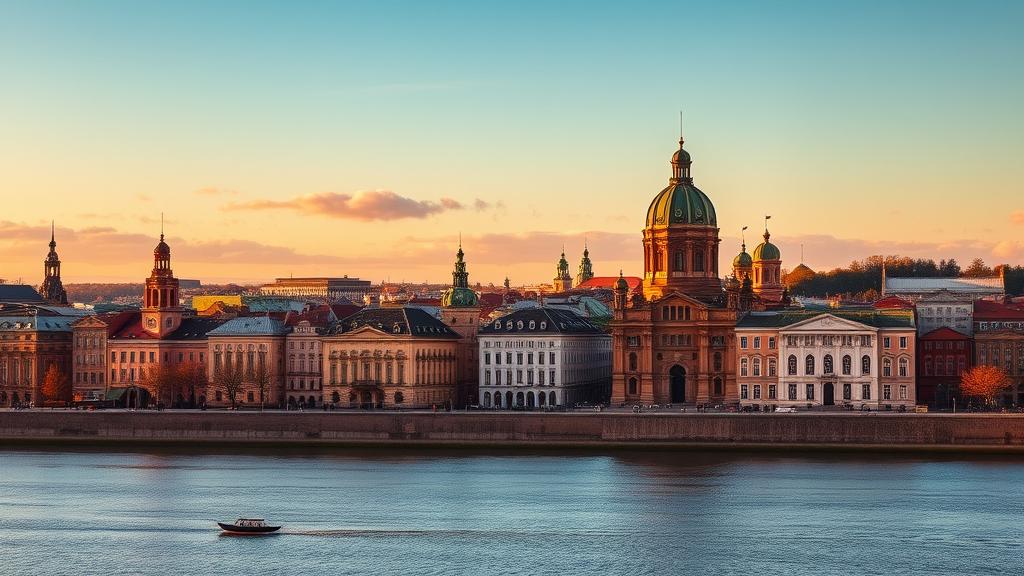
Latvia
লাটভিয়া
Important Notice
This content is AI-generated and under editorial review. Visa rules can change at any time. Always verify the latest requirements with the relevant embassy or immigration authority before making travel decisions.
6 months
passport validity required
Latvian
official language
EUR
currency
About
Latvia's economy has distinctive strengths in forestry and wood processing (6-7% of GDP, 22% of exports), making it the EU's most forest-dependent economy by share. Manufacturing, IT and fintech (concentrated in Riga), transport and logistics, construction, food processing, healthcare, and education round out the key sectors. A chronic labour shortage — driven by emigration to Western Europe since EU accession in 2004 — has forced Latvia to raise foreign worker salary floors to EUR 1,400/month (nearly double the national minimum wage of EUR 780) and tighten language requirements.
2026 RULE TIGHTENING: Latvia has significantly raised barriers for third-country workers. The Blue Card threshold increased from EUR 2,528/month to EUR 2,723/month (effective April 1, 2026). National work permits now require A2 Latvian proficiency for residence permits. Permanent residence requires B1 Latvian. These changes reflect both tightening EU-wide migration policy and Latvia's specific integration concerns around its large Russian-speaking minority (24.1% ethnic Russian, 36% Russian first language).
NON-CITIZEN STATUS: Latvia has a unique 'non-citizen' category — approximately 180,000+ Soviet-era Russian residents with permanent residence rights but no voting rights. This legacy shapes Latvia's immigration discourse in ways that differ from other EU countries.
LANGUAGE: Latvian is a Baltic language — it is NOT Slavic, NOT Germanic, NOT Romance. It belongs to the small Baltic branch of Indo-European (alongside Lithuanian) and has 7 noun cases, complex morphology, and zero linguistic overlap with Bengali. Despite Latvia's large Russian-speaking population, this is NOT useful for BD workers — the government requires Latvian for residence permits and all official purposes. English proficiency is moderate but concentrated in Riga's business sector.
EU member since 2004. Schengen since 2007. Eurozone since 2014 — Latvia uses the Euro (EUR), simplifying salary comparisons for BD workers compared to non-eurozone countries.
MINIMUM WAGE: EUR 780/month gross (2026), with planned increases to EUR 820 (2027) and EUR 860 (2028). However, foreign workers must earn at least EUR 1,400/month — nearly double the national minimum. This floor is specifically designed to prevent wage dumping.
If you travel to Latvia on a work-permit visa, you must obtain BMET clearance (smart card) from Bangladesh before departure — this applies to all work-visa migration regardless of destination, including the EU. PDO training may be waived for doctors, engineers, and those with 12+ months prior overseas work, but the smart card itself is still required. Students on study visas generally do not need it. The smart card fee was abolished in December 2025 — beware any agent charging you for BMET clearance.
SCAM WARNING: Latvia's low Blue Card threshold makes it a target for fraudulent recruitment. Verify any employer offer through NVA (State Employment Agency) or PMLP (Office of Citizenship and Migration Affairs). No legitimate employer charges the worker for visa processing. The EUR 180 state fee is paid by the applicant — anything above that is suspicious.
Entry & Visa Requirements
- Work Visa Required
- ENTERING LATVIA FOR WORK — VISA AND PERMIT PROCESS
NO BD EMBASSY IN LATVIA: Bangladesh does not have an embassy or consulate in Latvia. The nearest BD diplomatic mission is the Embassy of Bangladesh in Warsaw, Poland, which is accredited to Latvia, Lithuania, and Ukraine. For D-visa applications, BD nationals apply at the Embassy of Latvia in New Delhi (Latvia's mission accredited to Bangladesh).
D-VISA APPLICATION:
After receiving a work permit approval from PMLP (Office of Citizenship and Migration Affairs), the worker applies for a long-stay D-visa at the Latvian embassy/consulate. For BD nationals: Embassy of Latvia, New Delhi. Requirements: valid passport (6+ months), work permit approval letter, health insurance (minimum EUR 30,000 coverage), proof of accommodation, clean criminal record, biometrics. Processing: 15-30 working days. Fee: approximately EUR 60-100 for D-visa.
WORK PERMIT PROCESS (EMPLOYER-INITIATED):
1. Employer posts vacancy on NVA (State Employment Agency) portal for 10 working days — labour market test
2. If no suitable EU/EEA candidate found, employer applies to PMLP for work permit
3. PMLP reviews: salary minimum EUR 1,400/month, qualifications, employer compliance
4. Work permit issued — worker applies for D-visa at Latvian embassy
5. Upon arrival: register at PMLP for Temporary Residence Permit (TRP)
6. TRP issued for 1 year, renewable
EU BLUE CARD (NO LABOUR MARKET TEST):
Blue Card applications bypass the NVA labour market test. Employer submits directly to PMLP with employment contract showing salary at or above EUR 2,723/month (standard) or EUR 2,178/month (shortage). University degree or 5 years equivalent professional experience required. Processing: 30-60 days. Blue Card valid for up to 4 years.
STATE FEE: EUR 180 for work permit/TRP application (standard processing). Expedited processing available at higher fee. - No return ticket required
- Proof of funds required
Work Permit Pathway
YEAR 0: ENTRY
Employer obtains work permit via PMLP (standard route) or applies for Blue Card directly. Worker obtains D-visa from Latvian embassy (New Delhi for BD nationals). Arrives in Latvia and registers for Temporary Residence Permit (TRP) at PMLP within 30 days.
YEARS 1-5: TEMPORARY RESIDENCE PERMIT (TRP)
TRP issued for 1 year, renewable annually. Tied to employer — changing jobs requires new work permit application. Blue Card holders: after 12 months of legal employment in Latvia, eligible for intra-EU mobility (work in another EU country under Blue Card rules). Job-loss protection for Blue Card: 3 months to find new qualifying employment.
A2 LATVIAN REQUIRED: Since 2026 rule tightening, A2-level Latvian language proficiency is required for residence permit issuance/renewal. This means: basic conversational ability, understanding simple sentences, filling out forms. For BD workers with zero Baltic language background, this requires dedicated study from day one.
AFTER 5 YEARS: PERMANENT RESIDENCE PERMIT
Requirements: 5 years continuous legal residence, B1 Latvian language proficiency (intermediate — significantly harder than A2), Latvian constitution and national anthem knowledge test, stable income, clean criminal record, EUR 170 application fee. Permanent residence is indefinite but must be renewed as a card every 5 years.
AFTER 10 YEARS: CITIZENSHIP
Latvian citizenship by naturalization after 10 years of total continuous lawful residence. Requirements: B1-B2 Latvian proficiency, written test on Latvian constitution, national anthem, and history. Fee: EUR 28.46.
CRITICAL: MUST RENOUNCE BD CITIZENSHIP. Latvia does NOT allow dual citizenship with Bangladesh (BD is not on Latvia's approved dual-citizenship country list). This is a significant decision — Bangladeshi workers must weigh permanent EU residence (which does not require renunciation) against full citizenship (which does).
SETTLEMENT PATHWAY COMPARISON:
- TRP (Year 1): work rights, Schengen travel, tied to employer
- Permanent RP (Year 5+): unlimited work rights, no employer tie, B1 Latvian required
- Citizenship (Year 10+): full political rights, EU citizen, must renounce BD citizenship
SCHENGEN MOBILITY:
Any valid Latvian residence permit grants visa-free travel to all 29 Schengen countries for up to 90 days in any 180-day period.
US STATE DEPARTMENT TIP RATING: Tier 2 (2025) — Latvia does not fully meet minimum standards for elimination of trafficking but is making significant efforts. The government continued to investigate and prosecute trafficking cases.
SHORTAGE OCCUPATIONS (2026): Construction trades (bricklayers, carpenters, electricians, plumbers), metal and machinery workers, healthcare professionals (nurses, medical technicians), IT specialists, transport and logistics operators, education professionals (especially STEM teachers). Shortage list published annually by NVA.
If you travel to Latvia on a work-permit visa, you must obtain BMET clearance (smart card) from Bangladesh before departure — this applies to all work-visa migration regardless of destination, including the EU. PDO training may be waived for doctors, engineers, and those with 12+ months prior overseas work, but the smart card itself is still required. Students on study visas generally do not need it. The smart card fee was abolished in December 2025 — beware any agent charging you for BMET clearance.
Overstay Penalties & Consequences
Latvia issues deportation orders with entry bans of 1-5 years recorded in SIS II (Schengen Information System), affecting all 29 Schengen countries. Latvia cooperates closely with other Baltic states (Estonia, Lithuania) and Nordic countries on immigration enforcement.
BLUE CARD SPECIFIC: If your Blue Card employment ends, you have 3 months to find new qualifying employment at or above the Blue Card salary threshold. If unsuccessful, your residence authorization lapses and you must depart voluntarily — failure to do so triggers formal removal proceedings.
TRP SPECIFIC: Standard work-permit TRP holders who lose employment must report to PMLP. The permit may be revoked if no new employer sponsorship is obtained within the permit validity period.
FOR BD WORKERS: There is no Bangladesh embassy in Latvia. The nearest consular assistance is from the Embassy of Bangladesh in Warsaw, Poland. In case of labour disputes or emergency situations, contact the Warsaw embassy immediately. Given the distance, maintaining valid documentation at all times is critical. Do not overstay — the consequences extend across the entire Schengen area and will bar re-entry for years.
Job Market
KEY SECTORS FOR FOREIGN WORKERS:
FORESTRY AND WOOD PROCESSING: Latvia's signature industry — 6-7% of GDP and 22% of total exports. Latvia is the EU's most forest-dependent economy by share. Wood processing, furniture manufacturing, paper and pulp mills, and forestry operations create steady demand for skilled and semi-skilled workers. Major employers concentrated outside Riga in rural regions.
CONSTRUCTION: Chronic shortage of construction trades — bricklayers, carpenters, electricians, plumbers, welders. EU structural funds drive public infrastructure projects. Salary range EUR 1,400-2,200/month for skilled trades.
IT AND FINTECH (RIGA): Latvia has a growing fintech sector with companies like Mintos, Nordigen (acquired by GoCardless), and several payment processing firms. Riga offers IT salaries of EUR 2,500-4,500/month — often meeting or exceeding Blue Card thresholds. English is the working language in most Riga tech companies.
TRANSPORT AND LOGISTICS: Latvia's strategic position as a transit economy between the EU and former Soviet markets (rail, port, road freight) creates logistics demand. Riga Free Port and Ventspils Free Port are significant.
MANUFACTURING: Metal and machinery, food processing, pharmaceuticals. Salary range EUR 1,400-1,800/month.
HEALTHCARE: Nursing and medical technician shortages. Latvian language proficiency required.
EDUCATION: STEM teacher shortages, particularly in rural areas. Latvian language required.
MINIMUM WAGE VS FOREIGN WORKER FLOOR: National minimum EUR 780/month (2026). Foreign workers must earn at least EUR 1,400/month — nearly double. This floor prevents wage dumping but also means foreign workers are competing for mid-range positions, not entry-level.
HONEST ASSESSMENT: Latvia's small economy means limited absolute job numbers. The EUR 1,400/month foreign worker minimum and A2 Latvian requirement create real barriers. IT professionals targeting Riga's fintech sector have the clearest pathway. Construction and forestry trades offer volume but require language investment. Latvia is not a mass-migration destination — it is a niche opportunity for workers with specific skills.
Salary & Payments
| Sector | Min | Max | Currency |
|---|---|---|---|
| 0 | 0 | EUR/mo | |
| 0 | 0 | EUR/mo | |
| 0 | 0 | EUR/mo | |
| 0 | 0 | EUR/mo | |
| 0 | 0 | EUR/mo | |
| 0 | 0 | EUR/mo | |
| 0 | 0 | EUR/mo | |
| 0 | 0 | EUR/mo |
AVERAGE GROSS SALARY: EUR 1,831/month (Q1 2026), up 7.7% year-on-year. The 2025 annual average was EUR 1,815/month.
NET PAY BREAKDOWN (at foreign worker minimum EUR 1,400):
EUR 1,400 gross → approximately EUR 1,003 net after:
- Personal Income Tax (PIT): 25.5% on income up to EUR 105,300/year (effective rate lower due to non-taxable minimum)
- Employee social contributions: 10.5%
- Employer pays additional 23.59% social contributions on top
TAX STRUCTURE:
PIT: 25.5% (up to EUR 105,300/year), 33% above that threshold
Employee social security: 10.5%
Employer social security: 23.59% (paid by employer, not deducted from salary)
Non-taxable minimum: varies by income level (higher earners get smaller exemption)
SALARY TIERS FOR BD WORKERS:
At foreign worker minimum (EUR 1,400): NET ~EUR 1,003/month. After accommodation (EUR 350-450 outside Riga), food (EUR 150-200), transport (EUR 30-50), savings potential EUR 200-400/month.
At average salary (EUR 1,831): NET ~EUR 1,285/month. Savings: EUR 500-700/month.
At Blue Card shortage (EUR 2,178): NET ~EUR 1,500/month. Savings: EUR 700-900/month.
At Blue Card standard (EUR 2,723): NET ~EUR 1,840/month. Savings: EUR 1,000-1,300/month.
CURRENCY: Latvia uses the Euro (EUR) since 2014. No exchange rate risk for EUR-denominated savings — a practical advantage over non-eurozone EU countries (Hungary, Poland, Czechia, Romania).
REMITTANCE: EUR transfers to Bangladesh are straightforward. Wise, Western Union, and banking channels available. Riga has international banking infrastructure.
Where to Apply
Housing & Living
RIGA (capital, most expensive):
Rent (1-bedroom, city centre): EUR 600-840/month
Rent (1-bedroom, outside centre): EUR 350-450/month
Rent (shared room): EUR 200-300/month
Groceries: EUR 150-250/month
Public transport (monthly pass): EUR 30/month (Riga)
Utilities (electricity, heating, water): EUR 100-180/month
Mobile phone: EUR 10-20/month
Internet: EUR 15-25/month
Total single person (shared accommodation): EUR 500-750/month
REGIONAL CITIES (Daugavpils, Liepaja, Jelgava, Ventspils — 30-50% cheaper than Riga):
Rent (1-bedroom): EUR 200-350/month
Total monthly: EUR 350-550/month
These cities are where forestry, manufacturing, and construction jobs are concentrated.
FOOD COSTS:
Groceries are significantly cheaper than Western Europe. Rimi, Maxima, and Lidl are the main supermarket chains. Halal options are limited outside Riga — BD workers in regional cities should expect to cook and may need to source halal meat from Riga.
HEATING COSTS:
Latvia has harsh winters (November-March, temperatures regularly below -10C). Heating is a significant expense: EUR 50-100/month in winter depending on apartment and heating type. This is a cost that BD workers from a tropical climate may underestimate.
SAVINGS POTENTIAL AT DIFFERENT SALARY LEVELS:
At EUR 1,400/month (foreign minimum), living in regional city: Save EUR 300-500/month
At EUR 1,400/month, living in Riga shared: Save EUR 200-400/month
At Blue Card EUR 2,178 (shortage): Save EUR 700-900/month (Riga)
At Blue Card EUR 2,723 (standard): Save EUR 1,000-1,300/month (Riga)
COMPARISON: Latvia's cost of living is comparable to Lithuania and Estonia, slightly cheaper than Poland's major cities, and significantly cheaper than Germany, France, or Scandinavia.
Social & Culture
DIPLOMATIC PRESENCE: Bangladesh has NO embassy or consulate in Latvia. The nearest consular services are from the Embassy of Bangladesh in Warsaw, Poland, which is accredited to Latvia, Lithuania, and Ukraine. This creates a significant practical gap — for labour disputes, document authentication, or emergency assistance, BD workers must contact Warsaw. Latvia covers Bangladesh from its embassy in New Delhi.
COMMUNITY REALITY: A BD worker in Latvia will be isolated from any established Bangladeshi community. The practical implications:
- No BD-specific support networks or cultural organizations
- Very limited halal food options (some availability in Riga; minimal in regional cities)
- No Bengali-language services or media
- Islamic community exists (primarily from Central Asian and Middle Eastern backgrounds) — mosques in Riga can provide religious community but not BD-specific support
- Communication with Warsaw embassy by phone/email for consular matters
LANGUAGE ISOLATION: Latvian is a Baltic language with zero Bengali overlap. The Russian-speaking minority (36% Russian first language, 53.5% in Riga) does NOT help BD workers — the government requires Latvian for residence permits, official procedures, and most employment outside multinational Riga offices.
CITIZENSHIP REQUIRES RENOUNCING BD: Unlike many EU countries, Latvia does NOT allow dual citizenship with Bangladesh. Workers pursuing citizenship after 10 years must renounce BD nationality. Permanent residence (after 5 years, B1 Latvian) is an alternative that does NOT require renunciation — BD workers should consider whether permanent residence without citizenship provides sufficient security.
BMET CLEARANCE: If travelling on a work-permit visa, BMET smart card is required before departure from Bangladesh. The smart card fee was abolished December 2025 — beware agents overcharging.
PRACTICAL ADVICE: Given the absence of community infrastructure, BD workers considering Latvia should:
1. Secure employer-arranged accommodation before arrival
2. Register with the Warsaw embassy upon arrival
3. Begin Latvian language study immediately (A2 required for residence permit)
4. Connect with Riga's broader Muslim community for social support
5. Maintain all documentation meticulously — consular assistance is distant
Business Opportunities
WOOD PROCESSING AND FORESTRY: Latvia's signature economic sector — 6-7% of GDP and 22% of exports. The country is approximately 54% forested, and wood is the single largest export category. Opportunities include lumber mills, furniture manufacturing, engineered wood products, and pulp/paper. These operations are concentrated in rural areas (Vidzeme, Kurzeme, Latgale regions). For BD workers with manufacturing or trades experience, this sector offers steady employment. Salary range EUR 1,400-1,800/month for skilled positions.
TRANSIT ECONOMY AND LOGISTICS: Latvia's strategic position between the EU and former Soviet markets creates logistics demand. Riga Free Port handles container traffic, and Latvia's rail gauge matches the Russian/CIS gauge, making it a natural transit point. Warehousing, freight forwarding, and port operations create employment. Salary range EUR 1,400-2,000/month.
RIGA FINTECH CLUSTER: Latvia has developed a fintech cluster centred in Riga — Mintos (marketplace lending), Nordigen/GoCardless (open banking), and several payment processing companies. These companies often work in English and offer salaries meeting Blue Card thresholds (EUR 2,500-4,500/month). BD IT professionals with fintech, payments, or data engineering experience have a genuine pathway here.
CONSTRUCTION: EU structural funds continue to drive infrastructure and residential construction. Chronic shortage of construction trades: bricklayers, carpenters, electricians, plumbers, welders. Experienced BD construction workers can earn EUR 1,400-2,200/month.
FOOD PROCESSING: Dairy, meat processing, and fish processing operations in rural areas. Semi-skilled positions available at EUR 1,400-1,600/month.
HEALTHCARE: Nursing and medical technician shortages, but Latvian language proficiency is essential. BD nurses with Latvian B1+ could access this sector after language training.
HONEST ASSESSMENT: Latvia is not a mass-opportunity market. Its total labour force is under 1 million. The EUR 1,400/month foreign worker floor and A2 Latvian requirement create real barriers. The strongest opportunities are in Riga IT/fintech (for professionals) and construction/wood processing (for skilled trades). Workers should have realistic expectations about the small market size and plan for the language requirement from the outset.
Content Quality
AI Generated — Under ReviewVerify with Embassy
Visa rules change frequently. Always verify the latest entry requirements with the embassy or consulate of your destination country before making travel plans.
View Embassy DirectoryCost of Living
Latvia is one of the cheapest EU countries for living costs, making it attractive for workers aiming to maximize savings and remittances. RIGA (capital, most expensive): Rent (1-bedroom, city centre): EUR 600-840/month Rent (1-bedroom, outside centre): EUR 350-450/month Rent (shared room): EUR 200-300/month Groceries: EUR 150-250/month Public transport (monthly pass): EUR 30/month (Riga) Utilities (electricity, heating, water): EUR 100-180/month Mobile phone: EUR 10-20/month Internet: EUR 15-25/month Total single person (shared accommodation): EUR 500-750/month REGIONAL CITIES (Daugavpils, Liepaja, Jelgava, Ventspils — 30-50% cheaper than Riga): Rent (1-bedroom): EUR 200-350/month Total monthly: EUR 350-550/month These cities are where forestry, manufacturing, and construction jobs are concentrated. FOOD COSTS: Groceries are significantly cheaper than Western Europe. Rimi, Maxima, and Lidl are the main supermarket chains. Halal options are limited outside Riga — BD workers in regional cities should expect to cook and may need to source halal meat from Riga. HEATING COSTS: Latvia has harsh winters (November-March, temperatures regularly below -10C). Heating is a significant expense: EUR 50-100/month in winter depending on apartment and heating type. This is a cost that BD workers from a tropical climate may underestimate. SAVINGS POTENTIAL AT DIFFERENT SALARY LEVELS: At EUR 1,400/month (foreign minimum), living in regional city: Save EUR 300-500/month At EUR 1,400/month, living in Riga shared: Save EUR 200-400/month At Blue Card EUR 2,178 (shortage): Save EUR 700-900/month (Riga) At Blue Card EUR 2,723 (standard): Save EUR 1,000-1,300/month (Riga) COMPARISON: Latvia's cost of living is comparable to Lithuania and Estonia, slightly cheaper than Poland's major cities, and significantly cheaper than Germany, France, or Scandinavia.
Free Tools to Help You Apply
Apply directly to overseas employers.
All tools are free. Cover letter and contract checker require a free account.
Before You Travel
Visa-free entry is just the first step. Real preparation matters.
- • Passport validity (6+ months beyond travel date)
- • Return/onward ticket booking
- • Proof of funds documentation
- • Currency exchange arrangement
- • Vaccinations (per destination requirements)
- • Emergency contacts (embassy, family)
Sponsored Agencies
France Recruit Pro
Direct French site contracts
View profile →EuroStaff Solutions
Licensed EU recruiter since 2015
View profile →PolandWork Agency
Direct contracts with Polish factories
View profile →BritishWork BD
UK and Ireland recruitment specialists
View profile →Sponsored content. Verify agencies with BMET before any payment.
Last verified
13 Jun 2026
Visa rules may change — always verify before travel.


