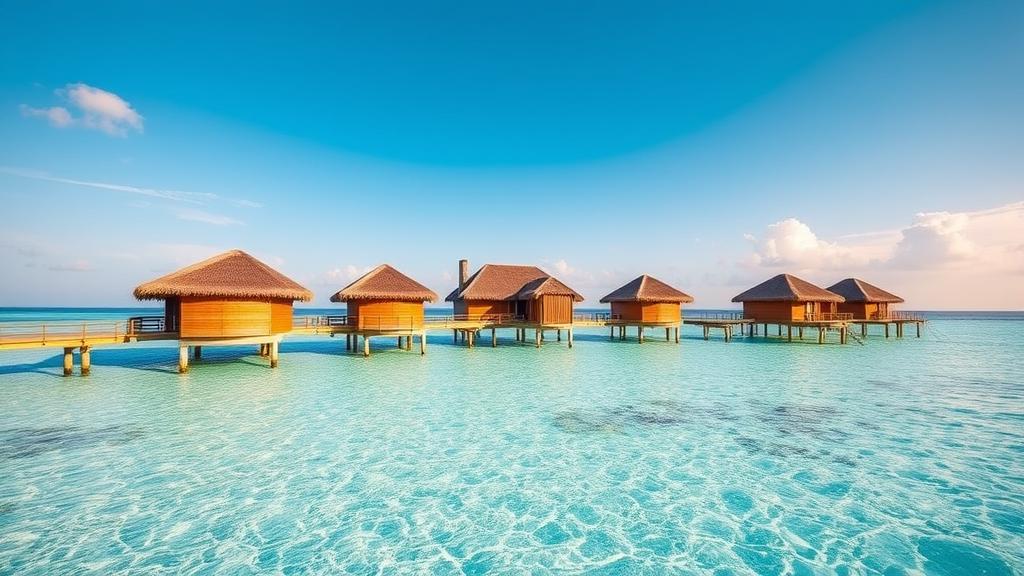
Maldives
মালদ্বীপ
Important Notice
This content is AI-generated and under editorial review. Visa rules can change at any time. Always verify the latest requirements with the relevant embassy or immigration authority before making travel decisions.
30
days max stay
6 months
passport validity required
Dhivehi
official language
English spoken
MVR
currency
About
The Maldives is an archipelago of 1,192 coral islands in the Indian Ocean with a population of approximately 521,000. Despite its small size, the Maldives hosts approximately **100,000 documented Bangladeshi workers** plus an estimated 10,000-15,000 undocumented — making the total **110,000-115,000**. Bangladeshi workers are the single largest foreign workforce in the Maldives, representing approximately 20% of the total population.
### Why the Maldives Matters
The Maldives is one of the most accessible international work destinations for Bangladeshis:
- **4-hour flight** from Dhaka
- **Visa on arrival** (30 days free for all nationalities)
- **100% Muslim nation** — culturally familiar
- **English widely spoken** in tourism sector and business
- **Established Bangladeshi community infrastructure** in Malé
GDP per capita is approximately **$13,379** (2024, World Bank nominal) — nearly 5 times Bangladesh's level. The economy is driven by tourism (28% of GDP, 60% of foreign exchange) and fisheries.
### The Critical Warning: 53% Wage Compliance
According to a study by the **Refugee and Migratory Movements Research Unit (RMMRU)**, only **53% of Bangladeshi migrant workers in the Maldives receive their promised wage**. This means nearly half of all Bangladeshi workers are being paid less than their contract states. The average monthly income for Bangladeshi workers is approximately **Tk 35,147 (~USD 335)**.
This is the single most important fact on this page. Before you accept a job offer to the Maldives, understand that the odds of receiving your promised salary are roughly a coin flip.
### Operation Kurangi — Immigration Crackdown
The Maldives government launched **Operation Kurangi** (2024-2027), a sustained crackdown on undocumented foreign workers. This includes:
- Daily raids on businesses employing undocumented workers
- Mass deportations
- Biometric registration of all foreign workers via the Xpat Portal (xpat.egov.mv)
A parallel **regularization program** allows undocumented workers to obtain valid work permits through their employers. The Bangladesh High Commission in Malé is urging undocumented workers to participate through their employers. However, the crackdown-regularization cycle is a documented pattern in the Maldives — it has happened before and will likely happen again.
### Exploitation Patterns
**Construction sector**: The primary sector for exploitation. Observers report unidentified trafficking victims among Bangladeshi construction workers. Recruitment fees create debt bondage similar to the Malaysia corridor.
**Recruitment fees**: High recruitment costs are documented. Workers commonly pay significant sums to agents in Bangladesh, arriving in the Maldives with debts that constrain their ability to complain or leave exploitative conditions.
**Domestic work**: Female foreign domestic workers face particular vulnerability due to isolation in private households.
**Minimum wage exclusion**: The Maldives minimum wage law (MVR 8,000/month for large businesses, MVR 7,000 for tourism) applies **ONLY to Maldivian citizens**. Foreign workers are explicitly excluded. Your salary depends entirely on your contract.
### Remittance Challenge
Workers are paid in **Maldivian Rufiyaa (MVR)** but must remit in US Dollars. The official exchange rate is approximately MVR 15.42 per USD, but black market rates can be 20-30% worse. Formal remittance channels are limited — many workers resort to informal hawala networks, losing a substantial portion of their income.
### Resort Employment — The Better End
Resort employment (170+ resort islands) offers the best conditions for Bangladeshi workers:
- Accommodation and meals typically **provided free** by employer
- 10% service charge shared among all staff (adds USD 100-200/month)
- Safer working conditions than construction
- Sectors: housekeeping, kitchen staff, waiters, maintenance, gardening, laundry
- Skilled roles (trained chefs, electricians, plumbers, AC technicians) command better wages
### TIP Status
The Maldives is classified **Tier 2 Watch List** (2025, second consecutive year). The government revived the National Anti-Trafficking Steering Committee but did not increase investigations or prosecutions. The bd-specific-finding classification reflects documented exploitation patterns affecting Bangladeshi workers specifically.
### BMET Clearance
BMET clearance is MANDATORY for all Bangladeshi workers going to the Maldives on employment. You must obtain your BMET smart card before departure. The smart card fee was abolished in December 2025 — any agent charging you for BMET clearance is overcharging. PDO (3-day pre-departure orientation) may be waived for workers with 12+ months prior overseas experience, but the smart card is still required.
### Xpat Portal (Digital Visa System)
Since November 2025, the Maldives uses a fully digital e-Visa system via the **Xpat Portal** (xpat.egov.mv). Physical visa stickers in passports are no longer valid. Employers must register on the portal to sponsor foreign workers. Workers should verify their employer has an active Xpat account before accepting any job offer.
The Active Jobs section above shows the current live count for Maldives.
Entry & Visa Requirements
- Visa on Arrival
- 30-day free visa on arrival for all nationalities. Required documents: valid passport (6+ months validity), confirmed return/onward ticket, confirmed hotel or resort booking, and proof of sufficient funds for the stay. No advance application or embassy visit needed. Extension possible up to 90 days through Maldives Immigration (fee applies).
Since November 2025, the Maldives uses a fully digital e-Visa system via the **Xpat Portal** (xpat.egov.mv) — work visa stickers in passports are no longer valid.
IMPORTANT FOR BANGLADESHI WORKERS: While tourist visa entry is easy, converting to a work permit requires employer sponsorship. The employer must apply for an Employment Approval (EA) through the Permits and Foreign Employment Division (PFED) via the Xpat Portal. Processing takes approximately 7 business days. The government has reintroduced stricter regulations on recruiting Bangladeshi workers due to human trafficking concerns — private employers can recruit up to 10 Bangladeshi workers with stricter conditions.
CRITICAL: Entering the Maldives on a tourist visa specifically to find work carries risk. If caught working without a valid work permit, you face deportation and a potential ban on re-entry. Always ensure your employer has a valid quota and has processed your work permit through the Xpat Portal before accepting a job offer. - Return ticket required
- Proof of funds required
Work Permit Pathway
### Employment Approval Categories
- **Commercial Category**: For companies hiring foreigners in professional and non-professional roles. Most Bangladeshi workers fall here.
- **Individual/Domestic Category**: For household employment (domestic workers, nannies, drivers).
### Required Documents for Bangladeshi Applicants
- Color passport bio-data page copy
- Digital passport photo (white background)
- Employment contract/appointment letter
- Relevant professional/educational certificates
### Key Features
- Work permit tied to employer (cannot freely change)
- Employer responsible for accommodation, medical insurance, and return ticket
- Since November 2025, only approved e-Visas are recognized — physical stickers invalid
- Workers must complete biometric registration as part of Operation Kurangi
### The Tourist-to-Work Permit Path
Many Bangladeshis historically entered on tourist visas, found work, then converted to work permits through employer sponsorship. The government has tightened this pathway significantly since 2024. Entering specifically to find work on a tourist visa carries risk of deportation.
Skilled workers (chefs, electricians, plumbers, AC technicians) remain in high demand and are more likely to secure employer sponsorship.
### Stricter Recruitment Rules (2024-2026)
The government has reintroduced stricter regulations specifically affecting recruitment of Bangladeshi workers due to documented human trafficking patterns. Private employers can recruit up to 10 Bangladeshi workers with enhanced verification conditions. Larger recruitment requires government approval.
### Bangladesh High Commission Support
Bangladesh High Commission Malé provides:
- Consular assistance for workers in dispute
- Emergency travel documents
- Labour welfare coordination
- Urging undocumented workers to participate in regularization through employers
Overstay Penalties & Consequences
TOURIST VISA OVERSTAY: If you overstay your 30-day tourist visa, you will be penalized under the Immigration Act. Penalties include fines (which must be paid before you can leave the country), potential detention, and deportation. Overstayers may be banned from re-entering the Maldives for a specified period.
WORK PERMIT VIOLATIONS: Working without a valid work permit — or continuing to work after your permit expires — is treated as an immigration offense. Under the current enforcement regime (Operation Kurangi Phase 3, launched May 2026), any expatriate found residing without paying the required visa/permit fees will be immediately arrested and deported. There is no grace period.
OPERATION KURANGI (2024-2027): The Maldives government launched this 3-year program to regularize all foreign workers. Phase 3 (May 2026-2027) is the enforcement phase — undocumented workers who failed to register during earlier phases face immediate arrest and deportation. As of 2026, approximately 62% of expatriates have valid documentation, meaning nearly 38% remain at risk. Biometric data has been collected from over 206,000 migrant workers.
EMPLOYER PENALTIES: Employers who abandon or neglect a foreign worker face fines of MVR 50,000-100,000 (USD 3,250-6,500). This is meant to protect workers, but in practice some employers use this as leverage.
PRACTICAL ADVICE: Never overstay your visa. If your employer promises to "handle the paperwork later," insist on seeing your valid work permit before starting work. Keep copies of all immigration documents. If you find yourself in an irregular situation, contact the Bangladesh High Commission in Malé immediately.
Job Market
### Sector Breakdown
**Resort and Hospitality** — the largest and best-paying employer of Bangladeshi workers. The Maldives operates 170+ resort islands, each a self-contained community requiring full service staff. Roles: housekeeping, kitchen staff (commis chefs, line cooks), waiters, laundry, gardeners, maintenance technicians. Most resort positions include free accommodation, meals, and basic healthcare.
**Construction** — the second-largest sector and the most exploitative. The Maldives has an ongoing construction boom — new resorts, infrastructure projects on Hulhumalé (reclaimed island near Malé), housing developments. Roles: general labourers, masons, carpenters, electricians, plumbers, heavy equipment operators.
**Domestic Work** — a growing sector. Maldivian families hire Bangladeshi domestic workers for household help, cooking, childcare. Particular vulnerability due to isolation.
**Retail and Services** — small shops, garages, cafes, fishing operations in Malé and other inhabited islands.
### Demand Sectors
Skilled tradespeople (electricians, plumbers, AC/refrigeration technicians, chefs with formal training) are consistently in higher demand and command better wages than unskilled labourers. English-speaking workers with hospitality training have the best prospects in the resort sector.
### Key Employers
Major resort groups actively hiring include Universal Resorts (5,100+ employees), Sun Siyam Resorts (6 properties), Crown and Champa Resorts (80+ positions typically listed), Villa Hotels and Resorts (1,100+ rooms), and Atmosphere Core (8 resorts). MTCC (state-owned, 1,090+ employees) is the major construction employer.
Salary & Payments
| Sector | Min | Max | Currency |
|---|---|---|---|
| Resort Housekeeping | 200 | 400 | USD/mo |
| Resort Kitchen Staff | 250 | 500 | USD/mo |
| Resort Waiter/F&B | 200 | 450 | USD/mo |
| Construction Laborer | 200 | 350 | USD/mo |
| Skilled Trades (Electrician/Plumber) | 350 | 600 | USD/mo |
| Chef (Trained) | 400 | 800 | USD/mo |
| Maintenance Technician | 300 | 550 | USD/mo |
| Domestic Worker | 150 | 300 | USD/mo |
### Salary Structure
**Resort workers** typically receive a basic salary plus a **10% service charge** shared among all staff. This can add **USD 100-200/month** depending on resort revenue. Total take-home is significantly higher than base salary — but the service charge is variable and not guaranteed.
**Construction workers** are paid a flat monthly rate with limited or no bonuses. This sector has the lowest wage compliance.
### Minimum Wage Exclusion
The Maldives minimum wage law (**MVR 8,000/month** for large businesses, **MVR 7,000** for tourism) applies **ONLY to Maldivian citizens**. Foreign workers are explicitly excluded from minimum wage protections. Your salary is entirely dependent on your employment contract.
### Remittance Challenge
Workers are paid in **Maldivian Rufiyaa (MVR)** but must remit in USD. The official rate is approximately MVR 15.42 per USD, but black market rates can be 20-30% worse. Formal remittance channels are limited — many workers lose a substantial portion of income through unfavourable exchange rates. Informal hawala networks are commonly used.
### Resort vs Construction — The Pay Gap
| Sector | Monthly (USD) | Notes |
|--------|--------------|-------|
| Resort Housekeeping | 200-400 | + service charge + free accommodation/meals |
| Resort Kitchen Staff | 250-500 | + service charge + free accommodation/meals |
| Resort Waiter/F&B | 200-450 | + service charge + tips |
| Trained Chef | 400-800 | Premium for formal training |
| Construction (general) | 200-350 | No benefits, highest exploitation risk |
| Skilled Trades | 350-600 | Electrician, plumber, AC tech |
| Maintenance Tech | 300-550 | Resort or building maintenance |
| Domestic Worker | 150-300 | Live-in, high vulnerability |
### Practical Advice
1. Get your salary in writing (employment contract)
2. Clarify whether salary includes or excludes accommodation/meals
3. If in resort, confirm the service charge sharing arrangement
4. For construction, understand that advertised wages are often not honoured — the 53% compliance rate is reality
5. Document every payment and keep records
Where to Apply
Last updated: 2026-06-15
Housing & Living
RESORT WORKERS (majority of Bangladeshis): Most resorts provide free accommodation (shared dormitory-style rooms), three meals daily, and basic healthcare. Your actual living cost is near zero, meaning your entire salary can be saved or sent home. This is the main financial advantage of resort work.
MALÉ / INHABITED ISLAND WORKERS: Living independently is expensive. Malé is one of the most expensive cities in South Asia:
- Shared room (2-4 people): MVR 3,000-6,000/month (USD 195-390)
- Single room: MVR 8,000-12,000/month (USD 520-780)
- Food (cooking at home): MVR 3,000-5,000/month (USD 195-325)
- Local food (cafes): MVR 50-100 per meal (USD 3-6.50)
- Transport: Most of Malé is walkable; ferries to Hulhumalé cost MVR 5.50
- SIM card/data: MVR 200-500/month (USD 13-32)
Most Bangladeshi workers in Malé share rooms (4-8 people per room) in cramped apartments to minimize housing costs. Total monthly living expenses in Malé range from MVR 5,000-8,000 (USD 325-520) when sharing.
IMPORTANT: Almost all food items are imported — fruits, vegetables, rice, and cooking supplies are significantly more expensive than Bangladesh. The exception is fish (locally caught tuna is affordable). Bangladeshi grocery shops in Malé stock familiar items but at premium prices.
Social & Culture
### Community Infrastructure
**Malé** has a well-established Bangladeshi support network:
- Bengali grocery shops (Radhuni masala, Pran products, Bashundhara goods, shutki)
- Community mosques where Bengali is spoken during informal gatherings
- Informal workers' associations providing housing and job referrals
- Bangladeshi restaurants serving familiar home food
### Religious Life
The Maldives is 100% Sunni Muslim. Friday prayers, Ramadan, and Eid are national events. Alcohol is prohibited on inhabited islands (resort islands only). Bangladeshi workers find this culturally familiar. Mosques are abundant on every inhabited island.
### Communication
Dhiraagu and Ooredoo provide mobile coverage. WhatsApp, imo, and Facebook widely used. SIM cards available with valid documents.
### Healthcare
Resort workers receive basic healthcare through their employer. Independent workers in Malé access Indira Gandhi Memorial Hospital and ADK Hospital, though costs can be significant without insurance. No universal healthcare for foreign workers.
### Social Challenges
Despite the large community, Bangladeshi workers face social stigma in local media. Anti-migrant sentiment surfaces during economic downturns. Operation Kurangi has heightened anxiety among workers with irregular documentation.
### Safety
Generally safe — petty theft and inter-worker disputes occur. Malé has gang activity but it rarely affects foreign workers. Resort islands are extremely safe.
### Key Contact
Bangladesh High Commission, Malé: male.mofa.gov.bd
Business Opportunities
FOREIGN BUSINESS OWNERSHIP: The Maldives allows 100% foreign ownership in most sectors. Foreign investors can lease land for up to 50 years for business purposes. There are no restrictions on foreign exchange, and profits can be repatriated without limitation. However, minimum investment thresholds and licensing requirements apply.
REALISTIC OPPORTUNITIES FOR BANGLADESHIS:
1. Grocery/Provision Shops: Several Bangladeshi-owned shops in Malé supply the large community with familiar food items imported from Bangladesh. This requires significant capital for import logistics and shop lease.
2. Tailoring and Alterations: Skilled tailors find steady demand in Malé and resort islands. Low capital requirement.
3. Construction Subcontracting: Experienced construction workers who understand Maldivian building codes can grow from worker to subcontractor. Requires established relationships and a proven track record.
4. Restaurant/Café: Small eateries serving Bangladeshi food have a captive market among the 90,000+ Bangladeshi community. Competition exists but demand is steady.
5. Remittance and Money Transfer Services: Given the significant remittance flow from Maldives to Bangladesh, authorized money transfer agents serve a critical need.
6. Travel Agency: Arranging travel between Bangladesh and Maldives for the large worker community.
CHALLENGES: Business registration requires navigating Maldivian bureaucracy. Work permits for business owners follow different rules than employee work permits. Finding affordable commercial space in Malé is extremely difficult due to the island's tiny size and high density.
IMPORTANT: Starting a business does NOT automatically grant you residency or a work permit. You must maintain valid immigration status throughout. Consult a local lawyer before investing.
Content Quality
AI Generated — Under ReviewVerify with Embassy
Visa rules change frequently. Always verify the latest entry requirements with the embassy or consulate of your destination country before making travel plans.
View Embassy DirectoryCost of Living
Living costs in the Maldives vary dramatically depending on whether you work at a resort or independently in Malé. RESORT WORKERS (majority of Bangladeshis): Most resorts provide free accommodation (shared dormitory-style rooms), three meals daily, and basic healthcare. Your actual living cost is near zero, meaning your entire salary can be saved or sent home. This is the main financial advantage of resort work. MALÉ / INHABITED ISLAND WORKERS: Living independently is expensive. Malé is one of the most expensive cities in South Asia: - Shared room (2-4 people): MVR 3,000-6,000/month (USD 195-390) - Single room: MVR 8,000-12,000/month (USD 520-780) - Food (cooking at home): MVR 3,000-5,000/month (USD 195-325) - Local food (cafes): MVR 50-100 per meal (USD 3-6.50) - Transport: Most of Malé is walkable; ferries to Hulhumalé cost MVR 5.50 - SIM card/data: MVR 200-500/month (USD 13-32) Most Bangladeshi workers in Malé share rooms (4-8 people per room) in cramped apartments to minimize housing costs. Total monthly living expenses in Malé range from MVR 5,000-8,000 (USD 325-520) when sharing. IMPORTANT: Almost all food items are imported — fruits, vegetables, rice, and cooking supplies are significantly more expensive than Bangladesh. The exception is fish (locally caught tuna is affordable). Bangladeshi grocery shops in Malé stock familiar items but at premium prices.
Free Tools to Help You Apply
Apply directly to overseas employers.
All tools are free. Cover letter and contract checker require a free account.
Before You Travel
Visa-free entry is just the first step. Real preparation matters.
- • Passport validity (6+ months beyond travel date)
- • Return/onward ticket booking
- • Proof of funds documentation
- • Currency exchange arrangement
- • Vaccinations (per destination requirements)
- • Emergency contacts (embassy, family)
Sponsored Agencies
Iberia Talent Bridge
IT and hospitality bridge to Iberia
View profile →NEW STAR RECRUITING AGENCY
Mk Nasir uddin
View profile →NordicWorks BD
Nordic specialist · highest EU wages
View profile →SwissAlps Talent
Switzerland and Austria — premium opportunities
View profile →Sponsored content. Verify agencies with BMET before any payment.
Last verified
20 Jun 2026
Visa rules may change — always verify before travel.


